


Floors
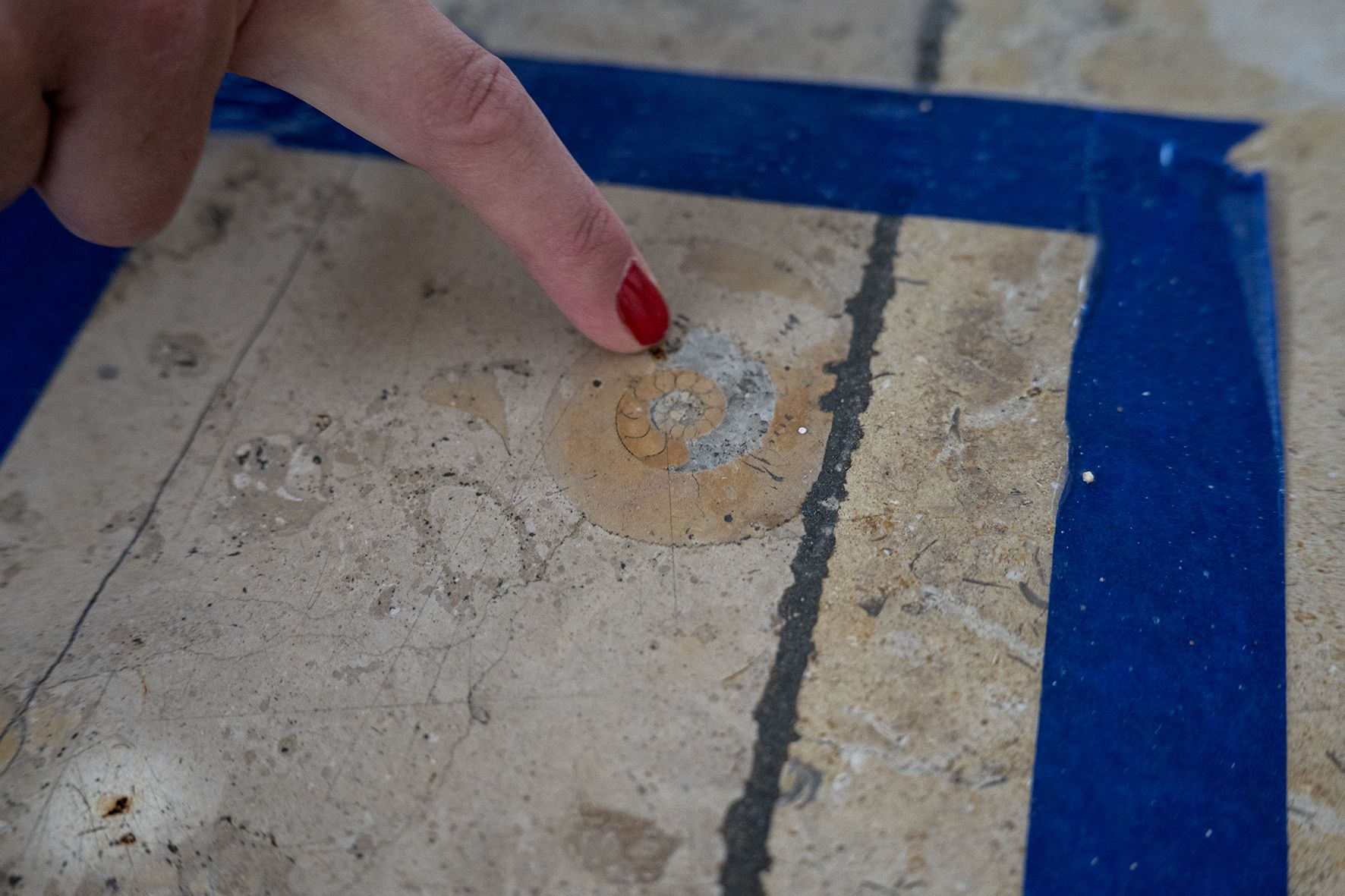
Amonites found in the limestone on the floor at BWA Żyjnia Gallery, Wrocław (PL) photo: Agata Kalinowska
Research of the historic floor in the BWA Gallery in Wrocław (Poland)
Biography of the floor at Żyjnia
The difficulty in telling the story of the floor begins with a banal fact: it has not been possible to determine exactly when the current flooring was installed in the space at 2 Świdnicka Street in Wrocław, Poland. The original architectural plans (1954) for Plac Młodzieżowy mention Silesian quarry marble, but photographs from the years following the opening of the service premises show a completely different floor, stone arranged in broad black-and-white stripes. There are simply too many unknowns to rely solely on archives. Instead of reconstructing the history of the floor only through designs and photographs, we attempt to tell its story from another perspective.
When we look at a floor long enough, beyond the designer’s intention and its basic function, we begin to see the material itself. And within the material, a landscape, a deposit, time, geological processes that took place long before anyone thought about architecture.
The project Biography of a Floor focuses on gaining the deepest possible understanding of the floor through the material from which it was made. We move away from perceiving it merely as an element of architecture and look at it in the context of the ecosystem from which it originates. We travel further back, to the geological era that gave rise to limestone formations. We also examine the contemporary landscape of limestone extraction, attempting to capture the moment when material becomes a product. This reversed translation, from architecture to product, from product to material, from material to deposit, from deposit to the Jurassic ecosystem, becomes a tool that allows us to understand the floor in a new way.
Contemporary floors often pretend to be something they are not: PVC panels imitate wood, linoleum imitates brick, ceramic tiles mimic concrete or stone. Changing interior design trends result in layers of accumulated laminates and surfaces. Interestingly, the floor at Żyjnia was also once intended to be covered with concrete; the interior was supposed to be visually neutralised. Fortunately, the floor at Żyjnia is not neutral. It is like a puzzle waiting to be decoded , it tells us more than we are able to perceive at first glance. Fossils of Jurassic organisms exist alongside mechanical damage; yellow stains — the result of limestone weathering processes, merge with marks left by paint. How do we read a floor whose history stretches back millions of years?
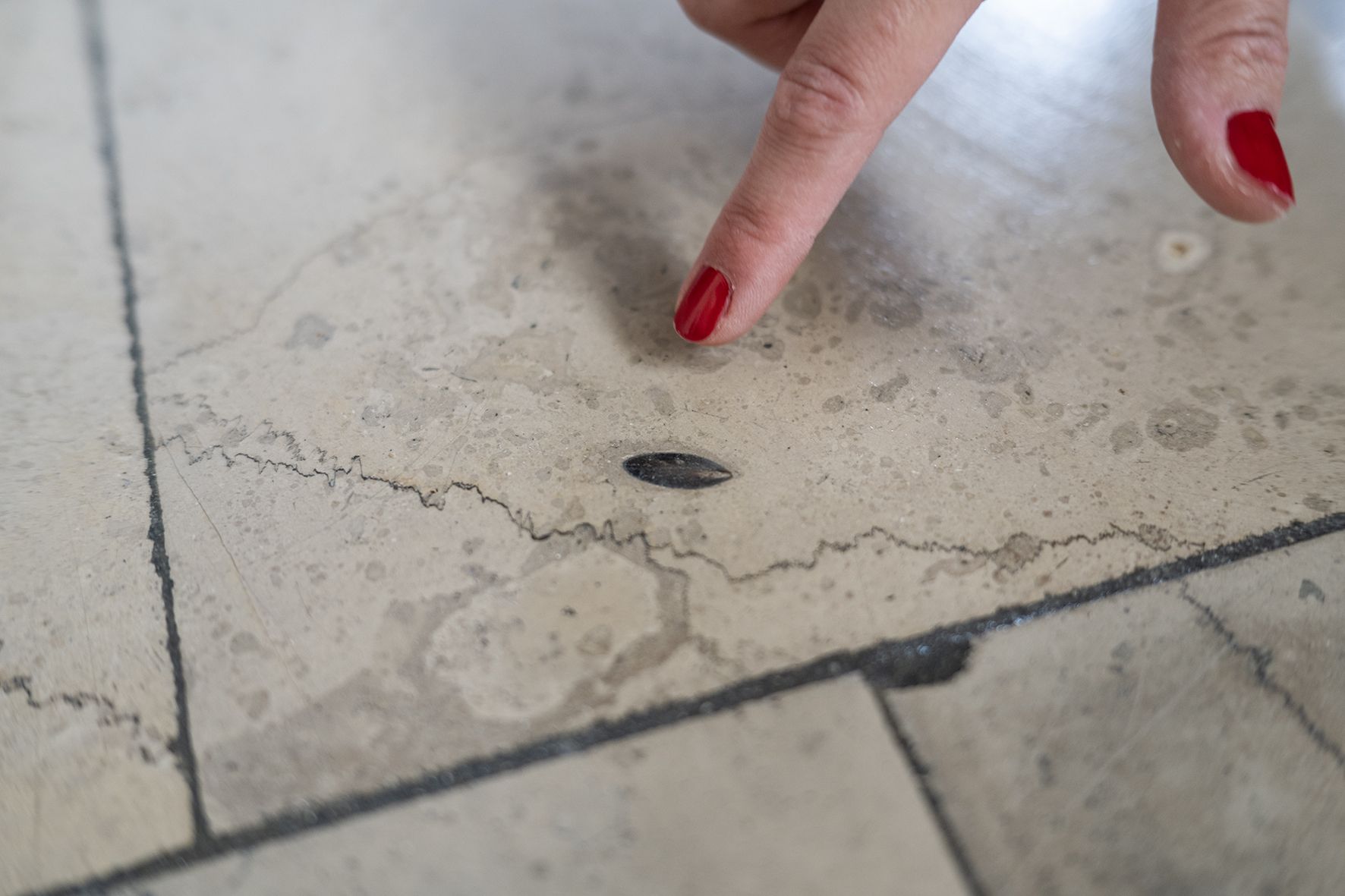
Belemnites on the floor at BWA Żyjnia Gallery, Wrocław (PL) photo: Agata Kalinowska
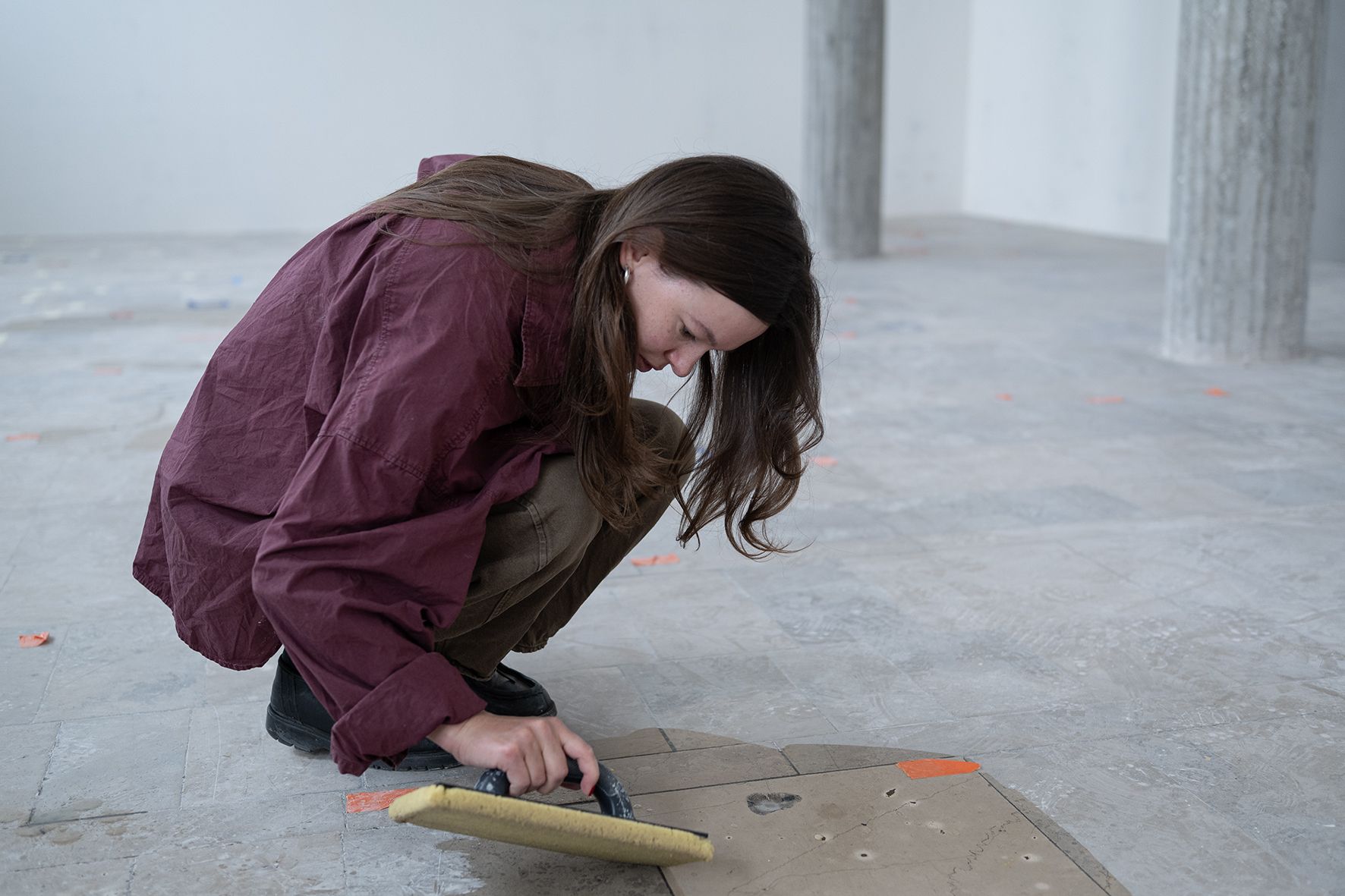
photo: Agata Kalinowska
My website uses cookies